
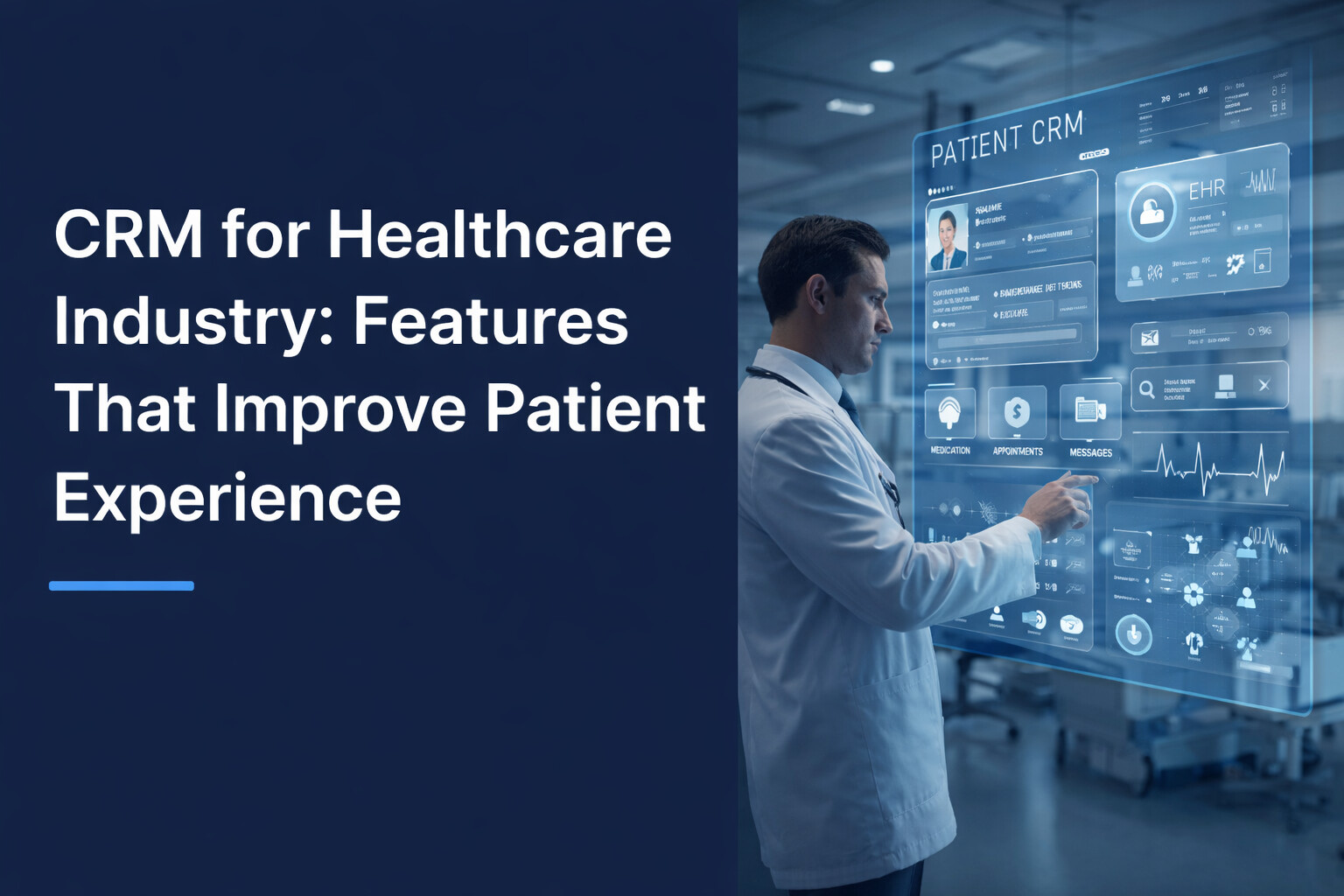
Healthcare organizations today face a delicate balancing act delivering personalized, high-quality patient care while managing rising operational complexity. Patients now expect the same level of responsiveness and transparency from healthcare providers that they receive from banks, airlines, or retail brands. This is where CRM in healthcare plays a transformative role.
Unlike traditional systems that focus only on clinical data, modern Healthcare CRM software connects patient interactions, communication history, and engagement insights into a single, actionable view. When implemented correctly, CRM becomes more than a management tool-it becomes a patient experience enabler.
In this blog, we explore the most impactful CRM features for healthcare, how they directly improve patient experience, and why choosing the best CRM for healthcare industry is now a strategic necessity rather than a technology upgrade.
Why CRM in Healthcare Is No Longer Optional
Healthcare providers manage thousands of patient touchpoints every day appointments, follow-ups, test results, billing queries, and care coordination. Without a centralized system, these interactions often remain fragmented, leading to delayed responses, repetitive communication, and patient dissatisfaction.
CRM for healthcare industry addresses this challenge by:
- Creating a unified patient profile across departments
- Enabling timely, consistent communication
- Supporting proactive care and engagement strategies
Organizations that adopt Healthcare CRM solutions report improved patient retention, higher satisfaction scores, and stronger long-term relationships.
Also Read – Signs Your Business Needs a CRM: How to Know It’s Time
Key CRM Features That Improve Patient Experience
1. Centralized Patient Data Management
At the heart of any effective healthcare CRM lies a 360-degree patient view. This feature consolidates demographic details, appointment history, communication preferences, and service interactions into a single dashboard.
How it improves patient experience in healthcare:
- Patients no longer need to repeat information across departments
- Staff gain context before every interaction
- Care teams deliver more personalized, informed responses
For multi-location hospitals or healthcare networks, centralized data eliminates silos and ensures continuity of care.
2. Personalized Patient Communication
Generic reminders and mass emails no longer resonate with patients. Advanced CRM features for healthcare allow organizations to personalize communication based on patient history, preferences, and behavior.
Examples include:
- Appointment reminders via preferred channels (SMS, email, WhatsApp)
- Customized follow-ups based on treatment type
- Health tips tailored to patient demographics or conditions
Personalization strengthens trust and makes patients feel genuinely cared for rather than processed.
3. Automated Appointment Scheduling and Follow-Ups
Missed appointments are a major operational challenge for healthcare providers. CRM automation significantly reduces no-shows by streamlining scheduling and follow-up workflows.
Key capabilities:
- Self-service appointment booking
- Automated confirmations and reminders
- Post-visit feedback requests
These features not only improve efficiency but also give patients greater control and convenience an essential component of modern patient experience.
4. Omnichannel Engagement Capabilities
Patients interact with healthcare organizations across multiple channels calls, portals, emails, and messaging apps. Healthcare CRM software ensures that all these interactions are tracked and connected.
Benefits include:
- Seamless conversations across channels
- Faster resolution of patient queries
- Consistent messaging regardless of touchpoint
From a patient’s perspective, this continuity reduces frustration and builds confidence in the provider’s responsiveness.
5. Integration with EHR and Clinical Systems
While CRM focuses on engagement, it delivers maximum value when integrated with EHR systems. This integration allows non-clinical teams to access relevant patient context without compromising clinical workflows.
Practical impact:
- Coordinated communication between care and admin teams
- Better post-discharge follow-ups
- Improved patient education and adherence
This is a prime example of how CRM improves patient experience in healthcare by bridging the gap between care delivery and patient engagement.
6. Data Security, Privacy, and Compliance Support
Trust is foundational in healthcare. Patients expect their personal and medical data to be protected at all times. The best CRM for healthcare industry incorporates strong security and compliance frameworks aligned with regulations like HIPAA.
Key features include:
- Role-based access control
- Data encryption
- Audit trails and compliance reporting
When patients feel confident that their data is secure, they are more willing to engage digitally and share accurate information.
Real-World Insight: CRM Impact in Action
Consider a mid-sized hospital network struggling with low patient follow-up rates. By implementing a customized healthcare CRM:
- Follow-up appointment adherence increased by over 30%
- Patient satisfaction scores improved within six months
- Administrative response times were cut in half
The transformation was not driven by technology alone, but by aligning CRM features with patient experience goals a common theme among successful Healthcare CRM solutions.
Choosing the Right CRM Strategy for Healthcare Organizations
Selecting the right platform is only part of the equation. Healthcare organizations must also consider customization, scalability, and long-term support. This is why many providers prefer working with a Partner for CRM Development and Custom CRM Software Solutions rather than relying solely on off-the-shelf tools.
A tailored CRM ensures:
- Alignment with unique care workflows
- Seamless integration with existing systems
- Future-ready scalability as patient expectations evolve
Also Read – Why Salesforce Is a Leading CRM Platform
Conclusion: CRM as a Patient Experience Differentiator
The benefits of CRM in healthcare industry extend far beyond operational efficiency. When thoughtfully implemented, CRM becomes a strategic asset that strengthens patient relationships, enhances trust, and supports better health outcomes.
From personalized communication to automated engagement and secure data management, the right CRM features directly influence how patients perceive and experience care. For healthcare providers aiming to stand out in an increasingly patient-centric market, partnering with a Trusted Custom CRM Development Company ensures that technology truly serves both caregivers and patients.
 MCP Server