
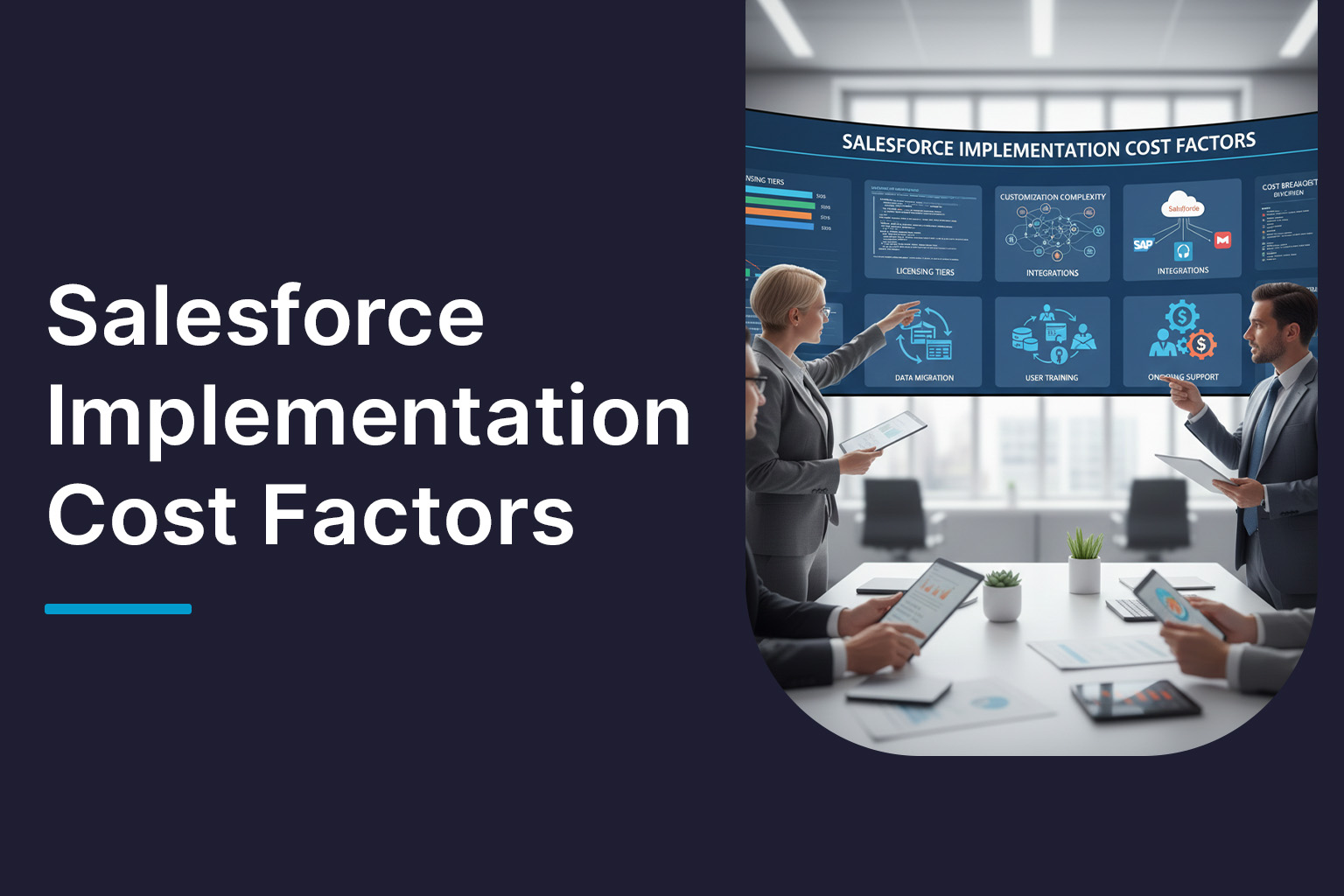
One of the first questions decision-makers ask before adopting Salesforce is simple: how much will it actually cost us? The challenge is that Salesforce pricing doesn’t end with licenses. Implementation costs vary widely based on business size, goals, and technical complexity, which is why many organizations struggle to set realistic budgets.
This article breaks down Salesforce implementation cost factors in a practical, transparent way. Instead of vague ranges, it explains why costs differ, what drives expenses up or down, and how businesses can plan smarter investments. Early involvement of Salesforce Consulting Services often helps organizations avoid cost overruns by aligning scope, architecture, and execution from the start.
Why Salesforce Implementation Costs Are So Variable
Salesforce is designed to serve everyone from startups to global enterprises. That flexibility is powerful, but it also means implementation is rarely one-size-fits-all.
A small sales team using standard CRM features will have a very different cost profile than an enterprise deploying multiple clouds with custom workflows and integrations. Understanding these variables is the key to answering how much does Salesforce implementation cost realistically.
Salesforce Implementation Cost vs License Cost
A common misconception is that Salesforce licenses represent the bulk of the investment. In reality, licenses are only one part of the picture.
Implementation costs typically include planning, configuration, data migration, integrations, testing, training, and post-go-live optimization. In many projects, implementation expenses equal-or exceed-the first year of license fees. This is why evaluating Salesforce implementation cost factors explained in detail is critical before committing to timelines or budgets.
Key Salesforce Implementation Cost Factors Explained
Project Scope and Business Complexity
The single biggest cost driver is scope. A basic Sales Cloud setup with standard objects and reports is far less expensive than a multi-cloud deployment spanning sales, service, and marketing.
Complex approval processes, custom data models, and industry-specific requirements all increase implementation effort. Businesses with undefined or frequently changing requirements often see costs rise due to rework.
Level of Customization Required
Salesforce offers extensive configuration options out of the box. When organizations rely heavily on these native capabilities, costs remain manageable.
Custom development-such as Apex code, Lightning components, or custom integrations-adds time and testing overhead. While customization can deliver strong business value, it is one of the most significant contributors to Salesforce implementation expenses when overused early.
A mid-market company once reduced its projected implementation cost by nearly 25% simply by replacing custom features with standard Salesforce automation.
Data Migration Complexity
Data migration is rarely as simple as moving records from one system to another. Data quality, duplication, and inconsistent formats can dramatically increase effort.
Migrating clean, well-structured data from a single CRM costs far less than consolidating data from multiple legacy systems. The more history you move, the higher the cost. This factor alone can significantly influence Salesforce implementation pricing.
Integrations with Existing Systems
Salesforce rarely operates in isolation. Common integrations include ERP systems, marketing automation platforms, accounting software, and customer support tools.
Each integration requires design, development, testing, and ongoing maintenance. Standard connectors reduce costs, while custom integrations increase both initial and long-term expenses. Businesses often underestimate how much integrations contribute to overall Salesforce implementation cost.
User Count and Role Complexity
The number of users affects more than just license fees. Different roles require different configurations, dashboards, permissions, and training.
For example, implementing Salesforce for 20 sales reps is far simpler than supporting sales managers, service agents, executives, and external partners. Role diversity increases configuration effort and training time, adding to total implementation expenses.
Training and Change Management
Training is frequently under-budgeted, yet it has a direct impact on adoption and ROI. Well-planned training programs reduce post-go-live issues and support costs.
Organizations that skip proper training often face hidden costs later, such as reconfiguration, support tickets, and low system usage. From a cost perspective, investing in training early is usually cheaper than fixing adoption problems later.
Deployment Approach and Timeline
Aggressive timelines often require larger teams or parallel workstreams, increasing costs. A phased rollout spreads expenses over time and reduces risk but may extend the overall project duration.
For example, deploying Sales Cloud first and adding Service Cloud later often results in better cost control than launching everything at once. Timeline decisions directly influence Salesforce implementation cost, even when scope stays the same.
Typical Salesforce Implementation Cost Ranges
While exact numbers vary, patterns emerge across projects.
Small businesses with limited customization often see implementation costs ranging from a few thousand dollars to the low five figures. Mid-sized organizations typically invest more, especially when integrations and data migration are involved. Enterprise implementations can reach six figures or higher due to scale, governance, and complexity.
These ranges highlight why understanding Salesforce implementation cost factors matters more than chasing generic price estimates.
Hidden Costs Businesses Often Overlook
Some costs don’t appear in initial proposals but impact budgets later. Ongoing optimization, admin support, upgrades, and performance tuning all contribute to long-term expenses.
Failing to plan for these elements leads to budget surprises, even when the initial implementation appears affordable.
How to Control Salesforce Implementation Costs
Cost control starts with clarity. Well-defined requirements, realistic timelines, and disciplined scope management prevent most overruns.
Using standard features wherever possible, migrating only necessary data, and prioritizing integrations strategically can significantly reduce costs without limiting future scalability. Experienced partners often help businesses balance short-term savings with long-term flexibility.
Conclusion:
Salesforce is a powerful platform, but its value depends on how thoughtfully it is implemented. By understanding Salesforce implementation cost factors, businesses can move from uncertainty to informed decision-making.
Costs are shaped by scope, customization, data, integrations, and adoption strategy-not by licenses alone. Organizations that plan holistically tend to achieve faster ROI and fewer surprises.
For companies seeking predictable outcomes and scalable architecture, Salesforce implementation Services provide structured planning, execution, and optimization that turn cost awareness into long-term value.
 MCP Server